
Thomas Tuchel Refuses to Blame ‘Curse’ After England’s World Cup Exit
England manager Thomas Tuchel has dismissed talk of a football curse after his side’s heartbreaking World Cup semi-final defeat to Argentina, insisting the loss should be analysed through football rather than superstition.
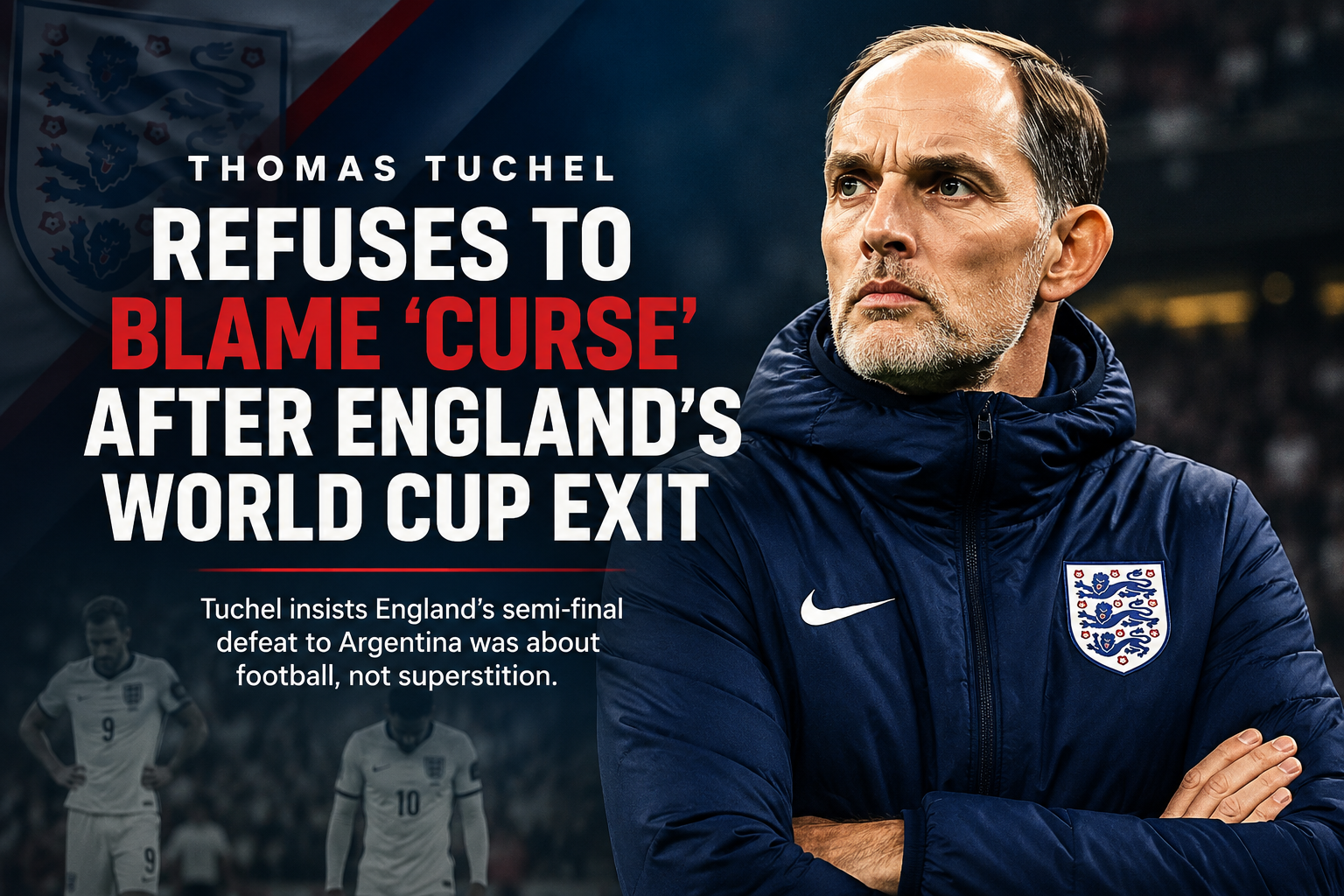
Thomas Tuchel Refuses to Blame ‘Curse’ After England’s World Cup Exit
The England manager accepted responsibility for his team’s late collapse against Argentina but rejected suggestions that the nation is suffering from a football curse.
England’s dramatic 2-1 defeat to Argentina in the FIFA World Cup semi-final has reignited familiar conversations about missed opportunities, painful exits and the weight of history. For manager Thomas Tuchel, however, the explanation is much simpler.
Speaking after England’s elimination, Tuchel dismissed suggestions that the national team is somehow cursed in major tournaments. Instead, he urged supporters and pundits to focus on what happened during the ninety minutes rather than searching for supernatural explanations.
England had looked destined for their first World Cup final since 1966 after Anthony Gordon gave them the lead early in the second half. But Argentina responded with renewed intensity, scoring twice in the closing stages to turn the match around and book their place in the final.
“It Was a Football Match, Not a Curse”
For decades, England’s repeated disappointments at major tournaments have led to constant discussions about a supposed inability to finish the job when it matters most.
Tuchel rejected that narrative.
The German coach insisted he prefers to analyse defeats through football rather than superstition, arguing that momentum, tactical decisions and individual moments ultimately determine results on the pitch.
His comments reflected a manager determined to keep the focus on performance instead of allowing old narratives to overshadow the progress England made throughout the tournament.
Tuchel Accepted Responsibility
While refusing to entertain talk of curses, Tuchel did not shy away from accepting responsibility for England’s defeat.
After taking the lead, England gradually retreated deeper into their own half as Argentina increased the pressure. Tactical adjustments, including adopting a more defensive approach, became one of the main talking points after the match.
Tuchel acknowledged that managers are always judged by their decisions in moments like these and accepted that criticism comes with the role. Despite the disappointment, he defended his approach and stressed that football often turns on small moments that are only obvious after the final whistle.
England’s Tournament Still Showed Progress
Although England fell short of reaching the final, their World Cup campaign contained plenty of positives.
The team navigated difficult knockout matches, displayed resilience under pressure and reached the last four of the tournament against some of the strongest opposition in international football.
Young players continued to gain valuable experience on the biggest stage, while several established stars reinforced their importance to the national team.
For England supporters, the manner of the defeat will hurt, but the tournament also demonstrated that the squad remains capable of competing with the world’s best teams.
Attention Turns to the Third-Place Playoff
England’s immediate focus now shifts to the third-place playoff against France.
Neither side began the tournament hoping to compete for third place, but the fixture offers both teams an opportunity to end their World Cup campaigns with a victory before attention turns toward future international competitions.
Meanwhile, Argentina will prepare to face Spain in what promises to be one of the most anticipated World Cup finals in recent history.
PredictSafe Analysis
Thomas Tuchel’s comments reveal a manager determined to protect his players from the emotional burden that often follows England after major tournament defeats.
Whether supporters agree with his tactical decisions or not, he has chosen to frame the loss as a football lesson rather than another chapter in a story of national misfortune.
England’s challenge now is to learn from the moments that decided the semi-final and use that experience as motivation for future tournaments. If they can do that, the conversation may gradually shift from what has happened in the past to what this talented squad can still achieve in the years ahead.